01Stone, Water, Patience
Natural Bridge is not a bridge in any human sense. No one built it, and it was never a crossing first. It is what remains after everything around it was dissolved away.
The rock is Ordovician-age limestone, laid down on a shallow seafloor roughly 450 million years ago. When the Appalachians began to rise, that ancient seabed was lifted, folded and fractured. Rain, soaking through soil and taking on a mild carbonic acidity, found those fractures and went to work. Limestone dissolves in weak acid. Over millions of years, the trickle that would become Cedar Creek carved downward through a cave system, slowly enlarging the passage from within.
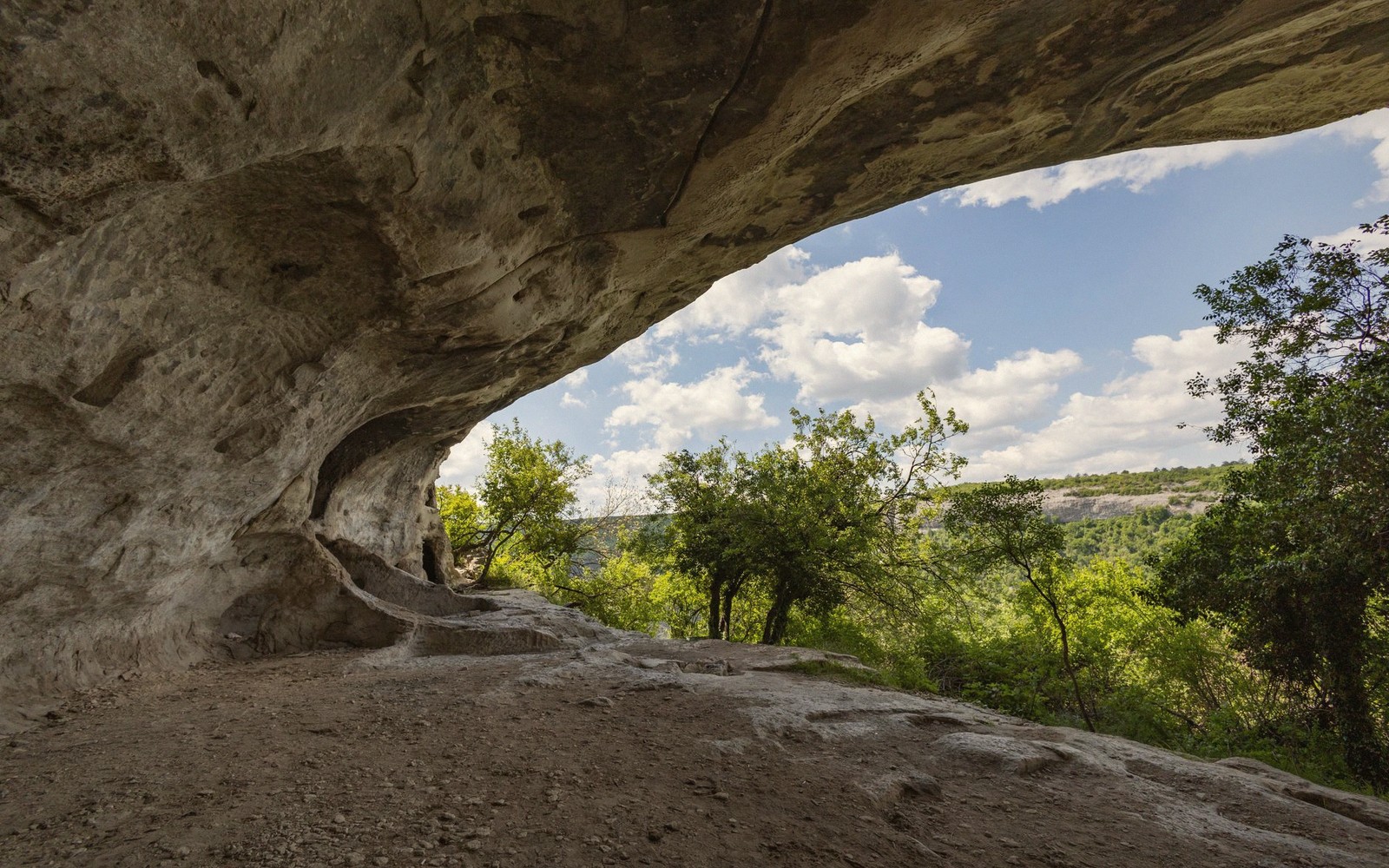
What you see today is the remnant of that cave's ceiling — a section thick and strong enough to survive after the rest of the roof collapsed or wore away. The creek, now flowing in open air, still runs beneath the arch precisely because it always ran there, underground, before the walls fell. The water did not carve around the rock. The rock gave way around the water.
The arch stands roughly 215 feet high and spans around 90 feet at its base. Those numbers are almost impossible to absorb standing beneath it, which is the point — karst landscapes like this one work at scales the eye is not designed to process. The dissolution that produced this feature was slow beyond imagining: a thickness of stone removed grain by grain across an expanse of geological time that makes human history vanish to a rounding error.
Cedar Creek continues to erode the limestone beneath the arch today, cutting its channel incrementally deeper. The bridge is not finished changing. In the same unhurried way that the cave ceiling became an open sky, the streambed will eventually drop further, the abutments will shift, and the shape you walked beneath will become something else — in another few million years.
Geology here is not background. It is the whole story.
Rain, soaking through soil and taking on a mild carbonic acidity, found those fractures and went to work.
| Term | What it means |
|---|---|
| karst | landscape formed by dissolution of soluble rock, typically limestone |
| Ordovician | geological period roughly 443–485 million years ago |
| carbonic acid | weak acid formed when rainwater absorbs CO₂; key agent of limestone dissolution |
| speleogenesis | the process by which cave systems form |
In sequence
- ~450 million years agolimestone deposited on ancient shallow seafloor
- Appalachian orogenyuplift and fracturing of the limestone
- Millions of years of dissolutioncave system carved by acidic groundwater
- Roof collapse / erosioncave ceiling opens; arch emerges
- PresentCedar Creek continues to erode the channel beneath the arch