01What You're Choosing Between
The Shenandoah Valley sits atop a karst landscape — limestone bedrock that groundwater has been dissolving for hundreds of millions of years, leaving behind a riddled underworld of chambers, passages and sinkholes. Where the geology is most accessible, entrepreneurial Virginians have been running cave tours since the nineteenth century, and several operations are scattered up and down the valley, within day-trip range of Lexington. The caves are real, the formations are genuine, and the differences between them matter more than the marketing suggests.
The four show caves most relevant to a Rockbridge-area visitor are Grand Caverns, Luray Caverns, Skyline Caverns and Natural Bridge Caverns. They vary significantly in scale, character, geology and crowd density. Picking the right one — or the right order, if you have two days — depends on what you actually want from the experience.
02The Caves, Compared
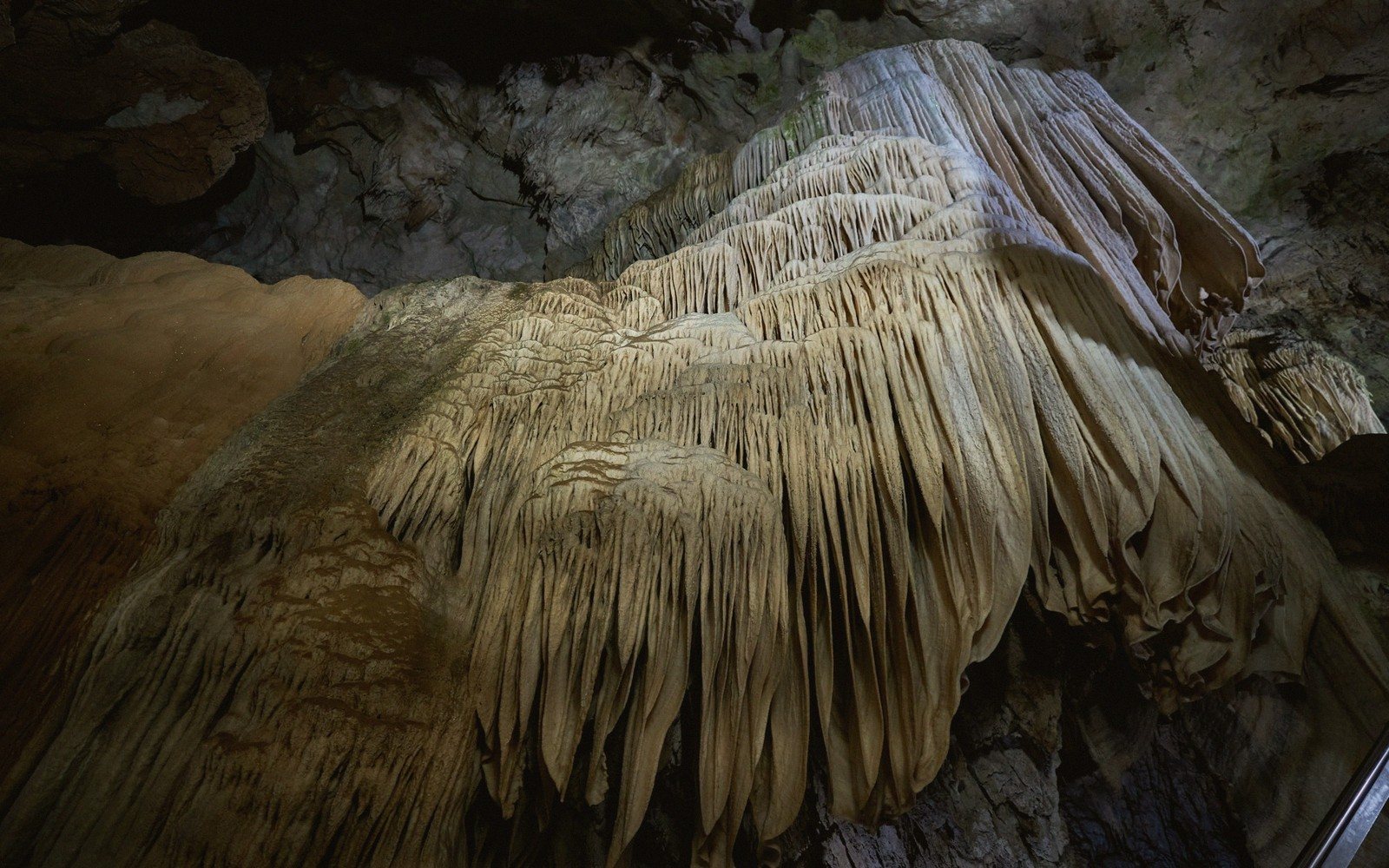
Grand Caverns, near Grottoes in Augusta County, is the oldest show cave in the country, documented since the early nineteenth century — Stonewall Jackson's troops visited during the Civil War, and their signatures survive on the walls. It sits roughly forty-five minutes north of Lexington. The rooms are broad and cathedral-like; the signature formations are the shield speleothems, rare plate-like structures found in relatively few caves worldwide. The scale feels genuinely grand rather than merely described as such. It is the most historically layered cave in the region and the one that rewards a slow, attentive visit.
Lifted from the entryPicking the right one — or the right order, if you have two days — depends on what you actually want from the experience.
Luray Caverns, farther north in Page County, is the largest show cave in the eastern United States and the one most visitors already have in mind. The chambers are enormous, the stalactite and stalagmite formations are dense and varied, and the Stalacpipe Organ — a mid-twentieth-century instrument that uses amplified cave formations as resonators — is a genuine curiosity. Luray is also reliably crowded, particularly on summer weekends. If you want spectacle and can visit on a weekday or shoulder-season morning, it delivers. If you are hoping for something quieter and more intimate, manage your expectations or go elsewhere.
Skyline Caverns, near Front Royal at the northern end of the Shenandoah Valley, is smaller and less dramatic in scale but notable for its anthodites — spiky aragonite formations that radiate outward from cave walls in multiple directions and form in very few places on earth. They are fragile and visually unlike anything else in the region's caves. Skyline is worth the stop specifically to see them; on its own general terms, it is not the most striking cave in the group.
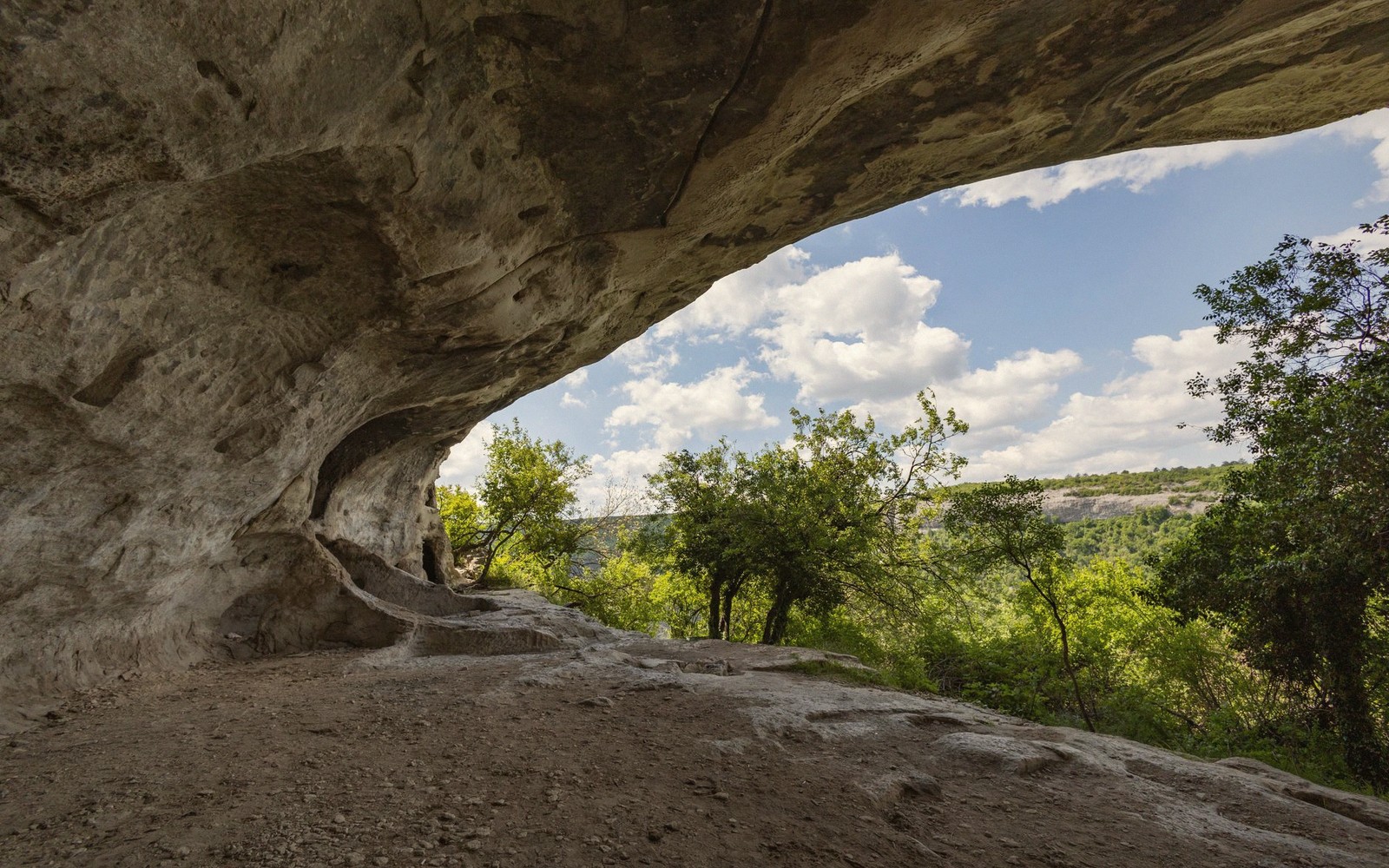
Natural Bridge Caverns sits directly beneath the Natural Bridge site in Rockbridge County, making it the most convenient option for visitors already based there. The cave is genuinely formed, with solid stalactite and stalagmite development, and the tour is well managed. It lacks the historical depth of Grand Caverns and the sheer scale of Luray, but it is a legitimate cave experience rather than a sideshow, and its pairing with the arch and the surrounding property makes for a full day without driving far.
| Term | What it means |
|---|---|
| karst | landscape formed by dissolving limestone, riddled with caves, sinkholes and springs |
| speleothem | cave formation built by mineral deposits from dripping or flowing water |
| stalactite | speleothem hanging from a cave ceiling |
| stalagmite | speleothem rising from a cave floor |
| shield speleothem | rare flat or curved plate-like formation projecting from cave walls |
| anthodite | rare spiky radiating aragonite crystal formation found in very few caves |
| aragonite | a carbonate mineral that forms certain cave crystals, including anthodites |
In sequence
- early 19th centuryGrand Caverns first documented and toured
- Civil War eraConfederate troops (including Jackson's) visited Grand Caverns; signatures survive
- mid-20th centuryStalacpipe Organ installed at Luray Caverns
| Grand Caverns | Luray Caverns |
|---|---|
| show cave near Grottoes, Augusta County; oldest in the country | largest show cave in eastern United States, Page County |
03How to Decide
If you have one cave in you and history is part of the draw, go to Grand Caverns. If spectacle is the priority and crowds are acceptable, Luray is the answer. If you are already at Natural Bridge and want to extend the morning underground, Natural Bridge Caverns is the sensible choice. Skyline Caverns is worth adding only if anthodites specifically interest you, or if you are driving through Front Royal anyway.
A few practical notes that hold regardless of which cave you choose: formations take tens of thousands of years to grow and are destroyed in seconds by touch. Every cave in this region maintains a stable year-round temperature in the mid-fifties Fahrenheit — bring a layer no matter the season. And the underground quiet, once you move away from the tour group and simply listen, is its own reward — something none of the brochures quite manage to convey.
Worth knowingThey vary significantly in scale, character, geology and crowd density.
Skyline Caverns
Noted on this sheet
cave near Front Royal; noted for anthodite formations
From the survey notes
Natural Bridge Caverns
Noted on this sheet
cave beneath the Natural Bridge site, Rockbridge County
From the survey notes
Grottoes
Noted on this sheet
small Augusta County town, location of Grand Caverns
From the survey notes