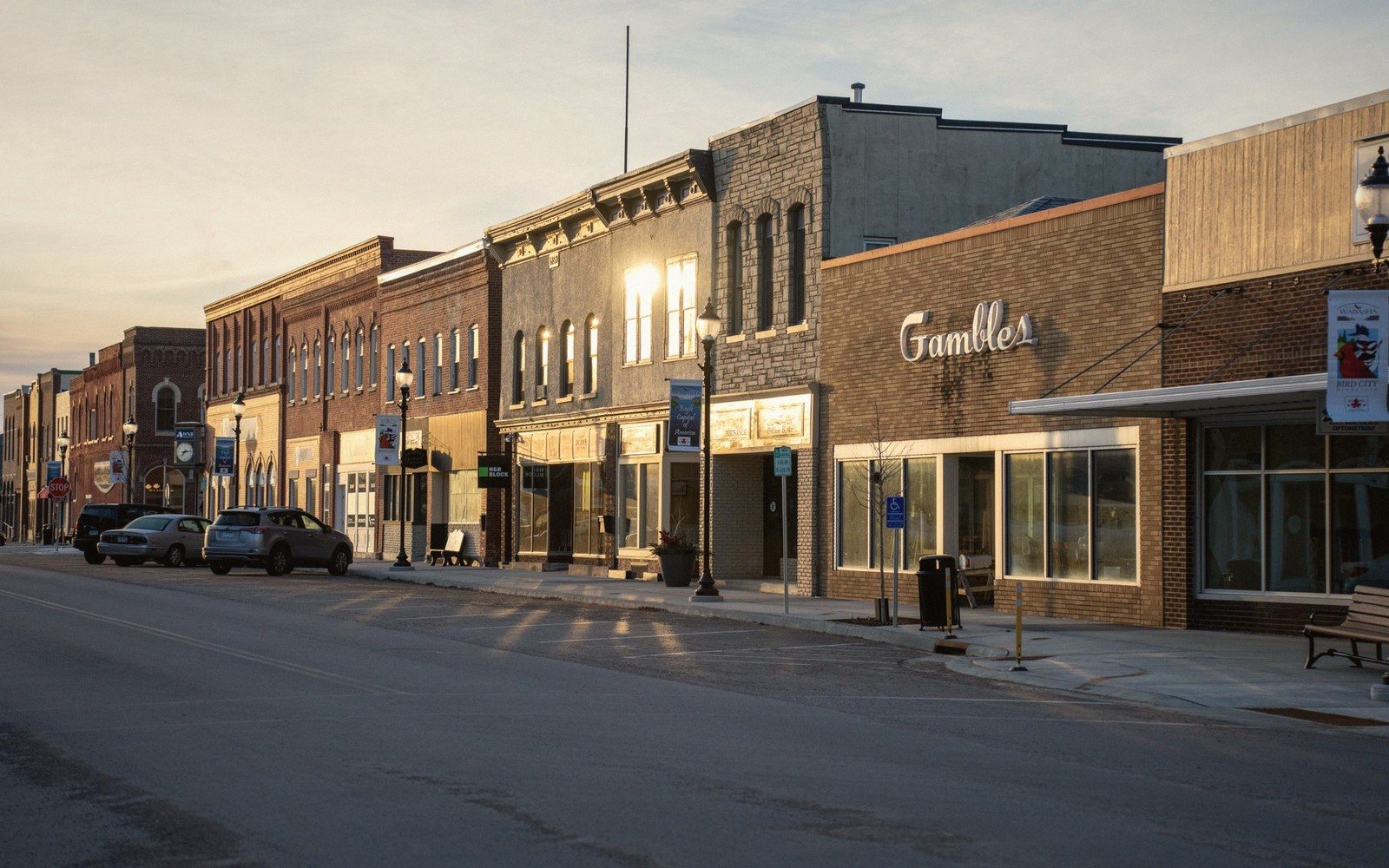
01A brick grid you can cross in twenty minutes, and the reason to slow down anyway.
02The Shape of the Town
Lexington is compact enough to misread on arrival. You park, you glance down Main Street, you think: fine, an hour. Then something slows you — a cornice line you haven't seen before, a gap between buildings that opens onto a churchyard, the particular quality of late afternoon light on limestone — and the hour becomes three. This is not a town that withholds itself, exactly, but it does reward a second look at almost everything.
Lifted from the entryGrowth here was slow and deliberate, and the town's architectural record is consequently intact in a way that larger Virginia cities are not.
The street grid is small and legible. Main Street runs roughly north-south through the center, with Nelson, Henry and Washington streets crossing it at right angles. The whole walkable core sits inside a twenty-minute stroll end to end, though the topography complicates that — the town sits on a ridge, and the streets that drop away from Main toward the Maury River lose elevation faster than they look like they will from the map. Bring shoes with grip if you plan to wander beyond the immediate commercial block.
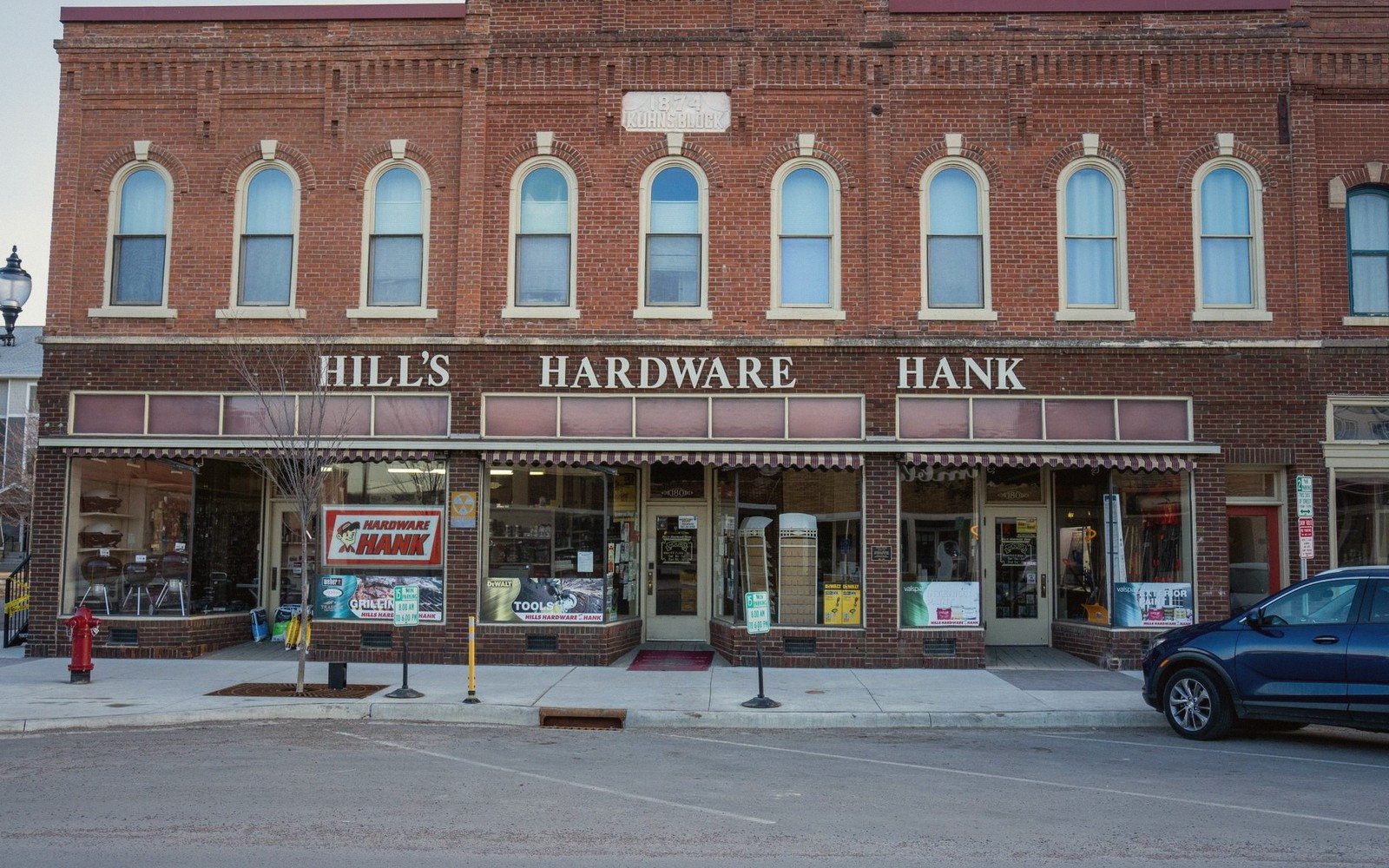
The buildings are mostly brick, mostly nineteenth century, and mostly in good condition — not because Lexington has been endlessly restored, but because it was never demolished in the first place. Growth here was slow and deliberate, and the town's architectural record is consequently intact in a way that larger Virginia cities are not. Greek Revival, Italianate and vernacular commercial forms sit elbow to elbow along the same block faces they have occupied since before the Civil War. The effect is not a museum — people live and work here — but it is unusually coherent.
In sequence
- 18th centuryWashington and Lee University's founding era, one of Virginia's oldest
- 1860sLee Chapel constructed during Robert E. Lee's tenure as university president
- pre–Civil Warmost of the surviving commercial and residential fabric dates to this period
03What You're Walking Past
Washington and Lee University occupies the hill at the north end of town, and its colonnade is visible from most of Main Street. The institution's origins reach back to the eighteenth century, making it one of the older universities in Virginia, and the campus proper — redbrick, columned, arranged on a formal axial plan — extends north and west of the main downtown block. The Lee Chapel, at the center of campus, is the building most visitors seek out: it was built in the 1860s and Robert E. Lee served as the university's president until his death in 1870. His office on the lower level has been preserved, and the chapel itself is an unassuming but quietly absorbing space.
Virginia Military Institute sits immediately adjacent, separated from Washington and Lee by a short walk and a shift in architectural register from brick domesticity to gray Gothic severity. The VMI parade ground, the Barracks and the museum occupy a tight precinct that feels distinct from the rest of the town — deliberately enclosed, institutional, facing inward. The VMI Museum holds one of the better collections of military artifacts in the region, including items connected to Stonewall Jackson, who taught at the institute before the war and whose statue stands outside.
Between the two institutions and the town center proper lies a cluster of commercial blocks that hold most of what you'd call downtown Lexington: independent booksellers, a hardware store that predates chain retail by generations, a handful of restaurants, the county courthouse. Nelson Street, one block off Main, is worth the detour — it's slightly quieter and gives you a cleaner read of the residential fabric that edges the commercial core.
The Stonewall Jackson House, on East Washington Street, is the only home Jackson ever owned, and it's been preserved and interpreted as a historic house museum. It's a modest structure — two stories of brick on a town lot — which is part of what makes it interesting. The scale is human, not ceremonial.
Greek Revival, Italianate and vernacular commercial forms sit elbow to elbow along the same block faces they have occupied since before the Civil War.
| Washington and Lee University | Virginia Military Institute (VMI) |
|---|---|
| private liberal arts university at the north end of downtown Lexington | state military college adjacent to Washington and Lee |
Worth knowingBring shoes with grip if you plan to wander beyond the immediate commercial block.
04The Edges and the In-Betweens
The most satisfying walks in Lexington often happen not on the main drag but in the transitional zones around it. The blocks east of Main, sloping toward the Maury, shift from commercial to residential within half a minute's walk, and the residential fabric there is some of the most intact in the county: antebellum houses on generous lots, original fencing, mature trees that have been growing long enough to shape the street as much as the buildings do.
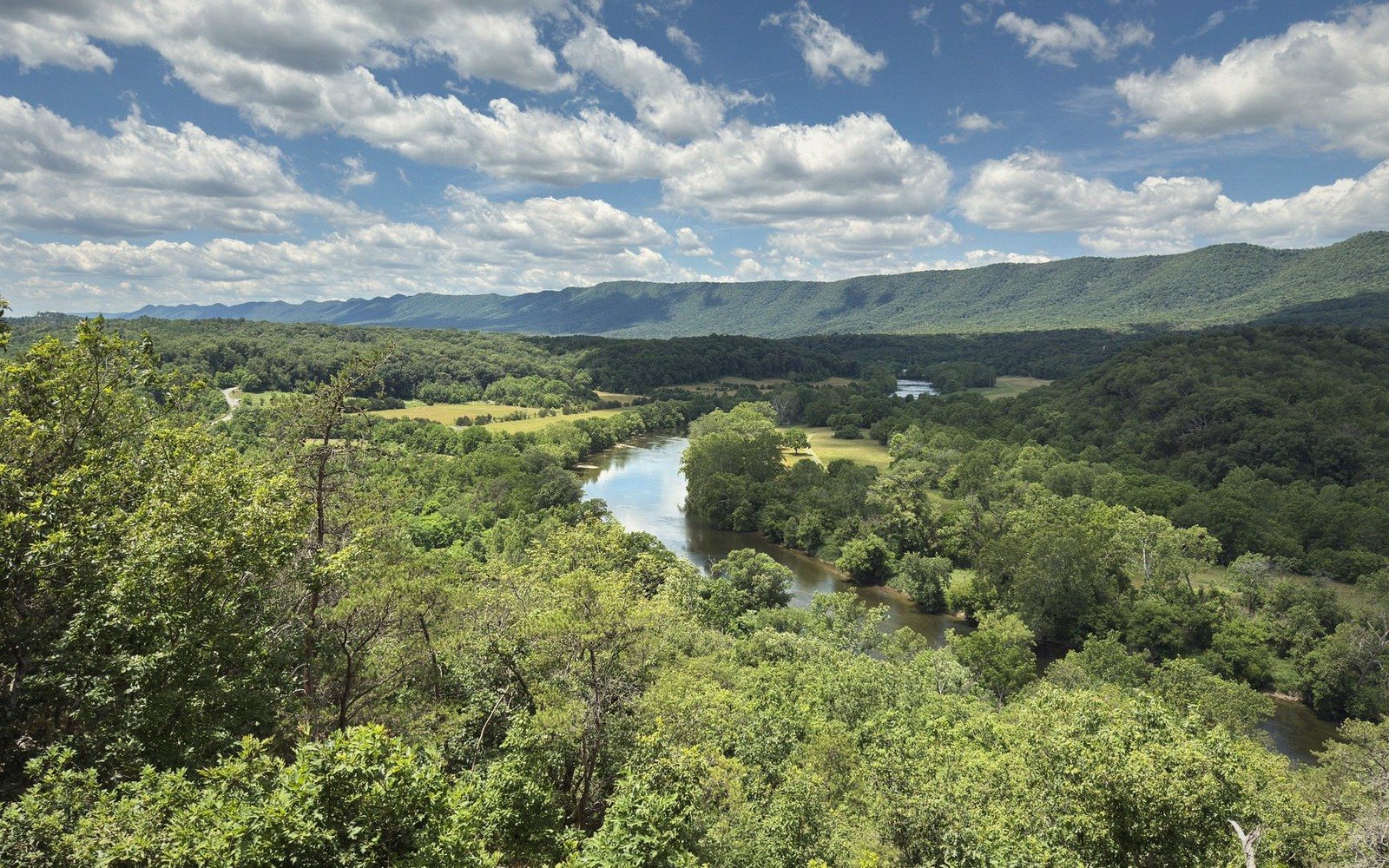
The Maury River itself is just beyond the eastern edge of the walkable downtown, reachable on foot in under ten minutes from Main Street. There's no dramatic overlook or formal access point — the approach is gradual, through a neighborhood and down toward the floodplain — but the river is there and it runs clear and fast over a limestone bed. In spring it runs high and loud; in late summer it drops to pools and gravel bars. Worth reaching even if you only sit above it for five minutes before turning back.
To the west, Letcher Avenue and the streets behind the VMI perimeter carry a different character again: Faculty Row, the line of houses long associated with the university, is a well-preserved example of institutional domestic architecture — simple, solid, a little formal. A few minutes in that direction and you're essentially out of town, with open fields ahead and House Mountain visible to the northwest, its flat-topped ridge unmistakable against the sky.
The town cemetery, on the south end of the grid, is not a morbid attraction but an architectural and historical record laid flat. The Confederate cemetery section holds the graves of soldiers from multiple states, arrayed in tight rows on a sloped lawn. The broader municipal cemetery is old enough to contain a complete cross-section of Rockbridge County's eighteenth- and nineteenth-century families, and the stonecutters' work across two centuries is worth the unhurried glance.
Robert E. Lee
Noted on this sheet
Confederate general; served as Washington and Lee president 1865–1870
From the survey notes
Stonewall Jackson
Noted on this sheet
Confederate general; taught at VMI; his former home is a museum on East Washington Street
From the survey notes
Lee Chapel
Noted on this sheet
1860s campus chapel, site of Lee's preserved office
From the survey notes
05Pace and Timing
Lexington is a university town, which means its energy is tied to academic rhythms. When the universities are in session, the streets are lively — coffee shops full, the bookstore browsed, the sidewalks populated. When they're out, the town quiets considerably. Neither version is wrong, but they're different experiences. Summer brings its own visitor traffic, which tends to concentrate around the main historic sites and thin out quickly in the residential streets and on the edges.
The best time of day to walk it is early morning or late afternoon. At midday in summer the brick absorbs heat efficiently and the streets lose their shade. In the hour before the shops open, you have the architecture to yourself. In the hour before sunset, the light on the west-facing facades of Main Street turns a color that rewards the unhurried.
Rain is not a reason to skip the town — the awnings along Main provide reasonable cover and the indoor stops are genuinely worth the time. The university bookstores and the handful of independent shops carry stock that reflects the particular intellectual character of a small college town: regional natural history, Civil War primary sources, Virginia poetry, serious trail guides.
One practical note: Lexington has a real parking structure off Main Street, and a number of surface lots. Neither fills beyond comfortable capacity except during graduation weekends and homecoming. You're unlikely to circle for long. Park once, leave the car, and walk. The whole point of Lexington on foot is that you don't need to move the vehicle again until you're done.
Two hours is enough to see it. Three is enough to understand it. Four, and you're not really sightseeing anymore — you're just in a town, which is the best thing to be.